
Aug 27, 2026
Emaar's Marketing Strategy in 2026: What Dubai Real Estate Brands Can Learn
An independent, data-backed teardown of Emaar Properties' 2026 marketing moves, campaigns and business results - and what Dubai brands can learn.
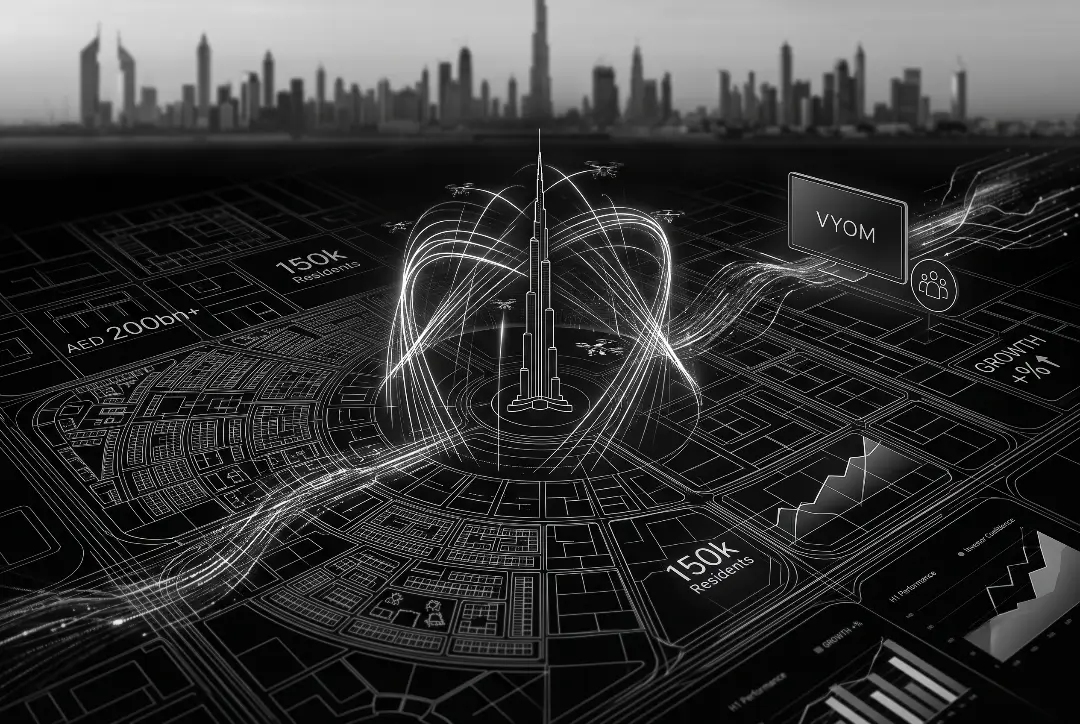
Published by sold.agency | Data current to 27 August 2026, referred to throughout as "2026 year-to-date"
Introduction
Emaar Properties is the most recognisable real estate brand to come out of Dubai. It built the Burj Khalifa, Dubai Mall and Downtown Dubai, and in 2026 it is still setting the pace: double-digit revenue growth, a record-scale AED200 billion masterplan announcement, and one of the region's most consistent experiential marketing calendars. That combination - strong financial performance alongside highly visible brand activity - makes 2026 a useful year to study.
This article examines what Emaar did in marketing terms during 2026, the strategic thinking that plausibly sits behind those decisions, what the company's financial results actually show, and what other Dubai businesses can take from the comparison. It draws only on information Emaar and independent publications have made public. Where we move from fact to interpretation, we say so explicitly.
A note on scope: Because this article is being published before the end of 2026, every performance figure below is labelled by its exact reporting period - Q1 2026, H1 2026, or "2026 year-to-date." None of it should be read as full-year 2026 performance, because the year is not yet over.
Emaar in 2026: The Numbers
Emaar Properties PJSC (DFM: EMAAR) has reported two quarterly disclosures so far in 2026. Figures below are as officially reported by Emaar and cross-checked against independent financial media.
Q1 2026 (1 January – 31 March 2026), reported 11 May 2026
H1 2026 (1 January – 30 June 2026), reported 7 August 2026
Sources: Emaar Properties official press releases (emaar.com), Zawya, Gulf News, TradeArabia, Emirates 24|7 and WAM. Figures are Emaar's own reported results; independent audited verification beyond what is disclosed in interim statements was not separately obtained for this article.
The Dubai Real Estate Context
Emaar's 2026 performance sits inside a real estate market that was itself growing, which matters for how much of Emaar's growth can reasonably be attributed to marketing versus market conditions (a distinction this article returns to later).
- Dubai Land Department reported AED252 billion in total real estate transaction value in Q1 2026, up 31% year-on-year, with 60,303 transactions (+6%) and foreign investment of AED148.35 billion, up 26%.
- For H1 2026, DLD-sourced reporting put total real estate transaction value at approximately AED291.7–419.9 billion depending on whether the figure includes only sales or all registered real estate procedures (mortgages, gifts, etc.); pure property sales were reported at roughly AED286.4 billion across ~86,000 deals - the second-highest first half on record, behind only H1 2025's AED326.6 billion.
- Off-plan transactions represented roughly 71% of H1 2026 deals, reflecting continued buyer confidence in developer payment plans - the segment Emaar and its peers compete in most directly.
- Full-year 2025 (the baseline going into 2026) closed with more than 270,000 transactions worth about AED917 billion, up 20% year-on-year - important context, but a 2025 figure, not a 2026 one.
Our analysis: this is a market where demand was already strong before any individual developer's campaign ran. That context matters for the causation question addressed later in this article - a rising market lifts many developers, not only the ones with the best marketing.
Emaar's Biggest Marketing Moves of 2026
Ranked by strategic significance based on scale, audience reach, and the directness with which each activity reinforces Emaar's broader brand positioning.
1. The "Countdown to 2026" Downtown Dubai New Year campaign (Dec 2025 – 7 Jan 2026)
What happened: Emaar staged an eight-day New Year's programme across Downtown Dubai, running from 31 December 2025 through 7 January 2026 - bridging the two years but explicitly branded as a celebration of welcoming 2026. The centrepiece was a ticketed Burj Park experience built around a "Bollywood Under the Stars" theme, produced in partnership with Shah Rukh Khan's Red Chillies Entertainment/Frontstage, alongside a large-scale theatrical parade through Downtown Dubai, drone and laser shows, and the traditional Burj Khalifa fireworks and fountain show. Tickets for Burj Park started at AED 997.50; free public viewing areas were set up along Sheikh Mohammed Bin Rashid Boulevard, with live LED screens.
Why it matters: this is Emaar's single largest annual owned-media event, and it is free (or low-cost) global media coverage generated entirely from real estate the company already owns. Our analysis suggests the objective is not direct property sales but destination association - cementing Downtown Dubai, not just Burj Khalifa the building, as the emotional home of Dubai's New Year identity, watched by broadcasters and millions online worldwide. This is Level 3 interpretation; Emaar does not publicly state a "marketing ROI" figure for the event, and none should be assumed.
2. Launch of the AED200 billion "Dubai Estate" masterplan (announced 12 June 2026)
What happened: Emaar founder Mohamed Alabbar unveiled a new master-planned community with a stated development value of AED200 billion (~US$54.4bn), covering more than 4.5 million sq m of gross floor area and designed to house close to 150,000 residents across five character zones, including an exclusive villa enclave with skyline views toward Burj Khalifa, Burj Al Arab and Palm Jumeirah.
Why it matters: announcing a masterplan of this scale - before individual towers, pricing or launch dates were confirmed - is itself a marketing act. It generated extensive independent press coverage (Gulf News, Zawya, Construction Week, TradeArabia, and others) purely because of the scale of the ambition, well ahead of any unit going on sale. Our analysis: this functions as an investor-confidence and brand-scale signal as much as a property announcement, reinforcing Emaar's identity as the developer capable of building "a city within a city" rather than incremental towers.
3. VYOM - Emaar's digital property platform campaign (Jan 2026 and July 2026)
What happened: Emaar ran outdoor advertising in Dubai in January 2026 promoting VYOM, its unified digital platform for browsing new launches, accessing verified resale listings, and completing property transactions. In July 2026, Emaar followed with a second, digital-out-of-home-only phase of the same campaign, using a consistent navy-blue, Arabic-forward creative identity across digital screens citywide.
Why it matters: this is Emaar formalising its own transaction layer rather than relying solely on broker networks and third-party portals - a direct-to-consumer digital infrastructure play. Running two phases roughly six months apart, with consistent creative language, indicates a sustained platform-awareness campaign rather than a single promotional burst.
4. Eleven new UAE project launches across H1 2026
What happened: Emaar Development launched 11 new residential releases in the first half of 2026 across Emaar South, Dubai Hills Estate, The Heights Country Club, The Oasis, Rashid Yachts & Marina and Expo Living - spanning five distinct master communities rather than concentrating launches in one location.
Why it matters: spreading launches across multiple established communities lets Emaar generate a steady drumbeat of "new inventory" news and sales-centre activity throughout the half, rather than one large launch event. This is consistent with a portfolio approach to demand generation - different communities, price points and buyer profiles are activated at different times, which likely helps smooth sales velocity across the year rather than concentrating risk into a single launch week.
5. Quarterly investor communications as public brand moments (11 May and 7 Aug 2026)
What happened: Emaar's Q1 and H1 2026 results releases were substantial public communications events, each generating dozens of pieces of independent financial press coverage. The H1 release paired the results with the Dubai Estate masterplan reveal in the same communications window, and the Q1 release was accompanied by an AED8.9 billion dividend payout - Emaar's second consecutive year of returning 100% of share capital to shareholders.
Why it matters: for a business audience, quarterly earnings function as a recurring PR and trust-building touchpoint. Backlog growth, dividend consistency and disciplined execution language ("pricing integrity," "disciplined capital allocation") are aimed at investors and analysts. Still, the same figures get repackaged by consumer-facing property portals and news outlets as proof points for buyers evaluating a developer's financial stability.
6. Emaar Communities - the post-purchase brand layer
What happened: Emaar operates a separate Instagram account, @emaarcommunities, distinct from the flagship @emaardubai account, which focuses on resident- and community-facing content rather than new-launch marketing. Independent monitoring (dated August 2026) recorded roughly 947,000 followers on the main @emaardubai account and roughly 12,000 on @emaarcommunities, along with approximately 817,000 Facebook page likes for Emaar Dubai.
Why it matters: maintaining a dedicated community-facing channel, separate from the sales-and-launches channel, suggests a deliberate split between top-of-funnel destination marketing and post-purchase retention/community messaging - evidence supporting the idea that Emaar treats the customer relationship as continuing well past the point of sale. Follower counts are a single-date snapshot (recorded August 2026) and will change; they are cited here only to illustrate relative channel scale, not as a performance metric.
How Emaar's Marketing Strategy Works
Based on our analysis of the pattern across the activities above, Emaar's publicly visible marketing activity can be understood through a layered framework. This is our interpretation of the observable pattern, not a strategy Emaar has published in these terms.
- Destination - city-scale events (NYE, Downtown Dubai programming) that associate Emaar with Dubai itself, not with any single project.
- Ambition - masterplan-scale announcements (Dubai Estate) that signal financial and developmental capacity before a single unit is sold.
- Infrastructure - owned digital platforms (VYOM) that reduce dependency on third parties and control the transaction experience.
- Portfolio cadence - a steady, multi-community drip of individual launches rather than one annual mega-launch.
- Proof - quarterly financial disclosure used as a recurring, evidence-based trust signal to both investors and prospective buyers.
- Community - dedicated post-purchase channels that keep existing owners engaged and generate word-of-mouth and resale confidence.
Read from top to bottom, this resembles a Brand → Destination → Experience → Community → Property → Transaction model: build broad emotional association with Dubai and Emaar first, then let individual project launches convert that accumulated trust into sales. Whether this sequencing is deliberate internal strategy or simply the natural output of running a diversified property, retail and hospitality group is not something Emaar has stated publicly - we present it as our reading of the visible pattern.
Emaar Doesn't Just Market Property - It Markets a Lifestyle
Across its 2026 public-facing communications, Emaar repeatedly connects individual developments to a broader lifestyle and destination narrative rather than leading with unit specifications. The Dubai Estate reveal, for example, was framed around "a city within a city" and a projected resident population, not floor plans or starting prices, which had not yet been confirmed at the time of the announcement. The NYE programme sells an experience of Downtown Dubai, not a specific address.
This is a meaningful difference from developers who lead primarily with incentive-based offers. DAMAC Properties, for comparison, ran a "Buy a Home, Get a Luxury Car" campaign in 2026 and closed 2025 with a Guinness World Records-referenced Dh11 billion in five-hour sales during the launch of DAMAC Islands 2, and separately partnered with Chelsea Football Club on Chelsea Residences - an incentive-and-association-led approach. Emaar's H1 2026 messaging around "pricing integrity" during the same period reads as a deliberate contrast: less discounting-led urgency, more sustained brand equity. We note this as an observable difference in public messaging, not a judgement on which approach is more effective - both companies grew sales in 2026.
From Destination to Property: Emaar's Marketing Funnel
This is our mapping of Emaar's likely customer journey, based on publicly available marketing channels. Emaar has not published its internal funnel or attribution data, so the exact conversion mechanics between stages are inferred rather than confirmed.
The Role of Experiential Marketing
A real estate developer investing heavily in a New Year's Eve show that most attendees will never buy a property because of is, on the surface, an odd use of marketing budget. The strategic logic, based on our analysis, likely rests on several mechanisms working together rather than a single direct sales link:
- Brand salience - repeated annual association between Emaar and Dubai's most photographed moment of the year.
- Earned and social media - user-generated content (fireworks videos, event photos) that Emaar does not have to pay to distribute.
- Destination association - reinforcing Downtown Dubai as the emotional "centre" of the city, which supports resale and rental value across every Emaar-owned property in that district.
- Prestige by proximity - hosting the show at Burj Park, adjacent to Emaar's own flagship tower, links the brand physically to the most recognisable skyline shot in the world.
None of this can be shown to cause a specific property sale directly, and Emaar does not publish a figure linking the NYE event to bookings. It is best understood as long-cycle brand investment, not short-cycle lead generation.
Emaar's Digital & Social Strategy
Emaar operates multiple purpose-specific channels rather than a single account: @emaardubai (~947K Instagram followers, general brand and launch content), @emaarcommunities (~12K followers, resident-facing), and separate project-specific channels for individual communities. On the advertising side, the 2026 VYOM campaign shows a deliberate two-phase approach - a broader outdoor push in January, followed by a more targeted, digital-screen-only phase in July - suggesting iterative testing of format and channel mix rather than a fixed annual media plan.
Emaar does not publicly disclose advertising spend, click-through rates, cost-per-lead or conversion data, and this article does not estimate any of these metrics. For Dubai brands thinking about their own digital visibility, the more useful question is increasingly not just where you rank on Google, but whether you show up in AI-generated answers at all - see our breakdown of SEO vs GEO vs AEO - and whether your site is structured in a way AI systems can actually cite.
Where third-party sources describe Emaar's broader digital marketing mix (SEO, paid search, content, email), we treat those as general industry commentary rather than 2026-specific verified fact, and have labelled them accordingly in the fact-check report below.
How Emaar Builds Trust
Three mechanisms recur across Emaar's 2026 public communications:
- Financial transparency at scale - publishing detailed quarterly figures (revenue, EBITDA, backlog, dividend) gives buyers and investors a level of visibility many private developers do not offer.
- Delivery record - repeated references to Burj Khalifa, Dubai Mall and Downtown Dubai as completed, functioning landmarks (not renders) ground the ambition of new announcements like Dubai Estate in a track record.
- Scale of backlog - a revenue backlog of AED164.9 billion as of 30 June 2026 is presented as evidence of committed future revenue, which functions as a proof point for buyers concerned about developer solvency and delivery risk, a known sensitivity in Dubai's off-plan market.
This appears designed to lower the psychological barrier between an unbuilt announcement (like Dubai Estate) and a buyer's willingness to commit - trust built at the corporate level is being used to support confidence in projects that do not yet have confirmed pricing or delivery dates. This is our interpretation of the pattern, not an Emaar-stated strategy.
How Emaar Creates Demand
Rather than one flagship annual mega-launch, Emaar spread 11 releases across six master communities in H1 2026 alone. Combined with the Dubai Estate reveal - which generates demand for a project not yet on sale - this creates layered urgency: buyers interested in the flagship future project are simultaneously offered live inventory in established communities. Payment plans and phased releases (standard in Dubai off-plan sales, though we did not find Emaar-specific 2026 payment-plan terms independently disclosed beyond general market reporting) are the conventional mechanism developers use to convert masterplan-level interest into transactions; we flag that specific 2026 Emaar payment plan structures were not independently verified for this article and should be checked directly with Emaar or its sales channels before being cited as current terms.
Did Emaar's Marketing Drive Its 2026 Growth?
This is the question the article must answer honestly, and the answer is: partially, unprovably, and probably not alone.
Emaar's Q1 2026 property sales grew 16% year-on-year, and H1 revenue grew 21% year-on-year, at the same time Dubai's overall real estate market was recording some of its strongest transaction values on record (AED252 billion in Q1 2026 alone, per DLD, +31% YoY). A rising market lifts most well-positioned developers simultaneously - DAMAC also posted strong 2025/2026 sales momentum over the same period, with its own distinct marketing approach.
What can reasonably be said: Emaar's brand visibility, destination-led events, masterplan announcements and disciplined financial communication ran concurrently with strong sales and revenue growth, and plausibly contributed to buyer confidence and consideration. Its backlog size and dividend consistency likely reduce perceived risk for buyers weighing developer solvency, a real factor in purchase decisions.
What cannot reasonably be said: that any specific campaign, event, or announcement caused a specific percentage of sales growth. Emaar does not publish marketing attribution data, and broader market tailwinds - population growth, tourism, interest-rate conditions, and constrained supply of ultra-premium homes - were operating on every Dubai developer at the same time, not on Emaar alone.
The intellectually honest conclusion: Emaar's 2026 marketing activity is consistent with, and supportive of, its financial performance - but it is one input into a multi-factor outcome, not a demonstrated cause of it.
7 Marketing Lessons Dubai Brands Can Learn From Emaar
1. Sell the outcome, not the product
Emaar's Dubai Estate announcement led with lifestyle and scale ("a city within a city," 150,000 residents) rather than floor plans. For any Dubai business, leading with the transformation a customer experiences - not the feature list - creates a stronger first impression, especially before pricing is finalised.
2. Turn physical experiences into media
The NYE Downtown Dubai programme functions as owned media: an event Emaar controls and stages on its own real estate, generating coverage and content it doesn't have to buy. Smaller brands can apply the same logic at a fraction of the scale - a pop-up, an in-store activation, a small public event - designed from the start to be photographed and shared.
3. Build brand demand before product demand
Announcing Dubai Estate months before pricing or unit details existed generated sustained press coverage on ambition alone. The strategic logic: earn attention for the vision first, then convert that accumulated interest once the product is ready to sell.
4. Use multiple touchpoints instead of one campaign
Emaar's 2026 activity spans events, masterplan PR, a two-phase digital platform campaign, 11 separate project launches, and quarterly financial communications - different channels reinforcing the same core narrative from different angles rather than one campaign carrying the whole message.
5. Build trust into the marketing funnel
Publishing detailed, regular financial disclosure is not typically considered "marketing." Still, for Emaar it functions as one of the most credible trust signals available - because it's independently verifiable, not self-declared. Smaller Dubai businesses can borrow the principle at their own scale: transparent pricing, visible delivery track records, and verifiable proof (real client results, real reviews) reduce the same buyer hesitation.
6. Make the destination part of the product
Emaar doesn't just sell a Downtown Dubai apartment; it sells proximity to the world's most recognised skyline moment, reinforced every New Year's Eve. Dubai-based brands in any category can apply the same idea: location, city identity, and "Dubai" itself carry marketing value that can be built into positioning, not just used as a backdrop.
7. Create content around the customer's aspirations, not your inventory
Across Emaar's 2026 communications, the recurring subject is what life in Dubai looks like - ambition, skyline, lifestyle - with specific units positioned as the way to access that life, rather than the other way round.
What Smaller Dubai Brands Can Actually Replicate
It's worth separating what requires Emaar-level resources from what doesn't.
Requires Emaar-level scale
- City-scale events with celebrity production partners (Red Chillies Entertainment)
- AED200 billion masterplan announcements
- A proprietary transaction platform (VYOM) built and maintained in-house
- Multiple simultaneous project launches across six communities
Accessible to smaller Dubai businesses
- Leading with outcome/lifestyle messaging instead of product specs
- Turning any physical space or event into shareable content, however small
- Publishing real proof points (results, reviews, delivery record) as a trust mechanism
- Running consistent, multi-channel messaging around one core narrative instead of one-off campaigns
- Treating existing customers as an ongoing community, not a closed transaction
Our Take: What Emaar's 2026 Strategy Says About Dubai Marketing
The broader lesson from studying Emaar in 2026 is not that scale wins - it's that consistency across formats wins. Emaar's marketing doesn't rely on one standout campaign; it relies on the same handful of ideas (Dubai as a destination, Emaar as proof of delivery, community as an ongoing relationship) being expressed repeatedly across events, PR, digital platforms, and financial communications. For Dubai brands of any size, the practical takeaway is that high-performing marketing increasingly requires brand, digital, content, experience and performance marketing to work as one integrated system rather than as separate, disconnected activities.
Frequently Asked Questions
What is Emaar's marketing strategy in 2026?
Based on publicly observable activity, Emaar's 2026 marketing combines large-scale destination events (like its Downtown Dubai New Year's programme), major brand-building announcements (the AED200 billion Dubai Estate masterplan), a growing proprietary digital platform (VYOM), a steady cadence of individual project launches, and transparent quarterly financial communication used as a trust signal. Emaar has not published this as a formal named strategy; this is our analysis of the visible pattern.
How does Emaar market its properties?
Emaar leads with lifestyle, destination, and ambition messaging rather than unit specifications, then layers in project-specific details, digital tools (VYOM), and sales-centre activity as buyers move toward a purchase decision.
What was Emaar's property sales growth in 2026?
Group property sales were AED22.4 billion in Q1 2026 (+16% year-on-year) and AED26.6 billion in H1 2026, according to Emaar's own reported results. Full-year 2026 figures are not yet available.
How does Emaar use experiential marketing?
Most visibly through its annual Downtown Dubai New Year's Eve programme, which in 2025/26 included an eight-day citywide celebration, a ticketed Burj Park experience produced with Shah Rukh Khan's Red Chillies Entertainment, and free public viewing areas - functioning as large-scale earned media and destination branding rather than direct property promotion.
What can Dubai developers and businesses learn from Emaar?
That sustained, multi-channel consistency around a small number of core brand ideas - destination, trust through transparency, and lifestyle over product - tends to outperform one-off campaigns, and that physical experiences can be designed deliberately as media, not just events.
Did Emaar's marketing cause its 2026 sales growth?
This cannot be established from public data. Emaar's growth occurred alongside a broader Dubai real estate market that was also growing strongly in 2026, and multiple factors - population growth, interest rates, supply constraints, and overall market sentiment - were operating at the same time. Marketing activity is one plausible contributing factor among several, not a demonstrated cause.
Disclosure: This is an independent analysis based on publicly available information. SOLD is not affiliated with or endorsed by Emaar Properties. Emaar is discussed for analytical and educational purposes only.
Sources & Further Reading
Emaar / Primary Sources
- Emaar Properties - "Emaar reports strong start to 2026" (Q1 2026 results), emaar.com, 11 May 2026
- Emaar Properties - H1 2026 results press release, emaar.com, 7 August 2026
- Emaar Properties - "Emaar prepares to unveil its most ambitious masterplan ever" (Dubai Estate), emaar.com, June 2026
- Emaar NYE 2026 official campaign site, mydubainewyear.emaar.com
- Emaar Properties blog - "Countdown to 2026" announcement, properties.emaar.com
Government & Official Sources
- Dubai Land Department - Q1 2026 transactions release, dubailand.gov.ae
Financial & Business Publications
- Zawya - Emaar Q1 2026 and H1 2026 results coverage
- Gulf News - Emaar H1 2026 results; DAMAC 2025 sales and Chelsea Residences coverage
- TradeArabia / Gulf Construction Online - Emaar Q1 and H1 2026 coverage; Dubai Estate masterplan
- Emirates 24|7 / WAM - Emaar H1 2026 revenue coverage; Dubai H1 2026 property transaction data
- Economy Middle East - Emaar Q1 2026 property sales coverage; Dubai H1 2026 real estate sales (W Capital/DLD data)
- Construction Week - Emaar AED200bn masterplan coverage
Industry Sources
- Time Out Dubai and Dubai.News - Burj Khalifa NYE 2026 event coverage
- Insite OOH - Emaar VYOM digital out-of-home campaign coverage, July 2026
Tell us about your business, and we’ll create a custom plan to grow your traffic, leads, and predictable revenue.


Project or Idea, big or small, It matters.
We'd love to hear that.
We'd love to hear that.
better get


